-
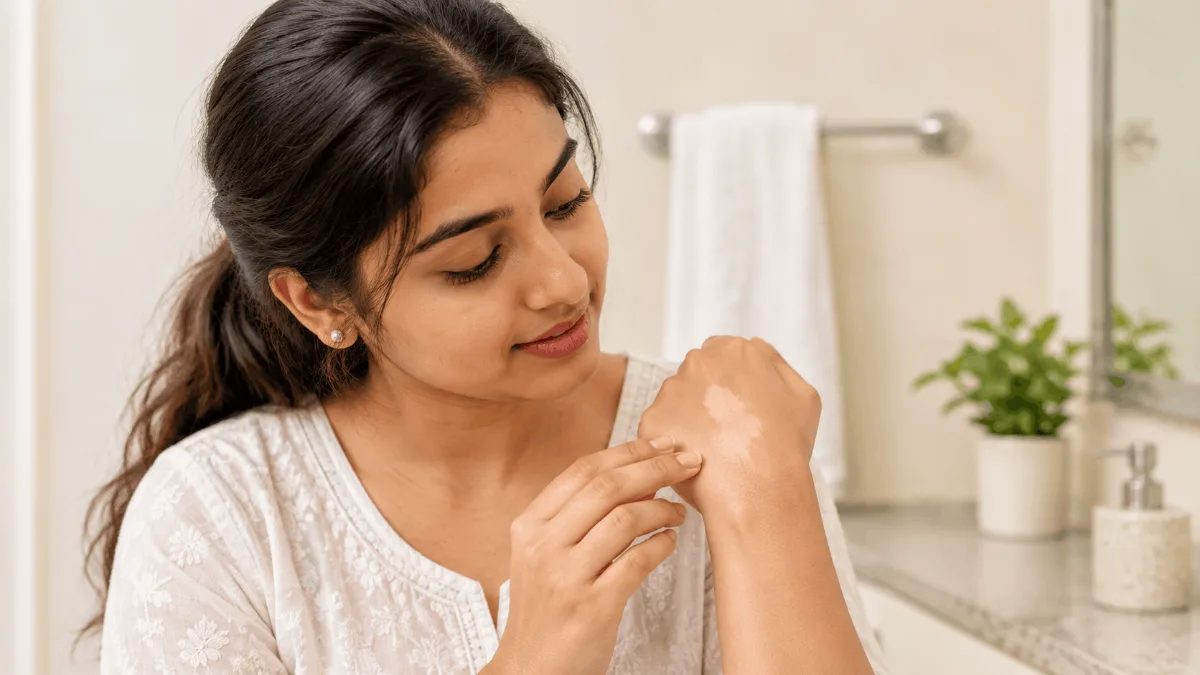
Early Signs of Vitiligo: How to Spot It and What to Do Next
The early signs of vitiligo explained: light or pink patches, white hair, where it starts, conditions that look similar, how it is…
-

Vitiligo Treatment Options Explained: Creams, Light Therapy and More
A plain-language guide to vitiligo treatment options in 2026: creams, the first approved tablet, light therapy, surgery, depigmentation and cover-ups.
-

Monobenzone Side Effects: What to Expect and How to Stay Safe
Burning, redness, permanent colour loss and sun sensitivity: the monobenzone side effects to know before starting depigmentation for vitiligo, and how to…
-

Living Confidently with Vitiligo: 5 Community Stories
Five stories about confidence, choice and kindness from people living with vitiligo.
-
How to Choose a Cover Cream That Matches Your Tone
Find your undertone, test shades the right way and apply cover cream for a natural, long-lasting finish, if and when you want…
-
Sun Safety 101 for Vitiligo Skin
Why depigmented patches need extra sun care, how much sunscreen to use, and simple habits that make daily protection easy.
How to Manage Vitiligo in Everyday Life
Living with vitiligo is different for everyone, but a few simple habits make a big difference to how your skin feels and how confident you feel in it. Here is how to manage vitiligo day to day, with links to our in-depth guides.
1. Protect Your Skin from the Sun
Depigmented skin has no melanin to protect it, so it can burn in minutes. Dermatologists recommend a broad-spectrum, water-resistant sunscreen with SPF 30 or higher on all uncovered skin, reapplied every two hours outdoors. Seek shade around midday and wear a hat, sunglasses and light long sleeves. Read our full Sun Safety 101 for Vitiligo Skin guide.
2. Keep Your Skincare Gentle
Choose fragrance-free cleansers and moisturisers, pat your skin dry instead of rubbing, and keep showers warm rather than hot. A simple routine of cleanser, moisturiser and sunscreen is enough for most people. Browse products made for sensitive skin in our vitiligo skincare shop.
3. Use Makeup and Cover-Ups If You Want To
Cover cream is completely optional. If you want a more even look for an event or a busy week, test shades in daylight, apply thin layers and set with powder for longer wear. Our guide on how to choose a cover cream that matches your tone walks you through it step by step.
4. How to Manage Vitiligo and Help Stop It Getting Worse
There is no guaranteed way to stop vitiligo spreading, but protecting your skin helps. Sunburn and skin injuries such as cuts, burns or constant friction can sometimes trigger new patches, so wear sunscreen daily, choose soft clothing that does not rub and take care when shaving. The American Academy of Dermatology shares more self-care advice for vitiligo.

5. Look After Your Confidence and Wellbeing
Vitiligo can affect how you feel as much as how your skin looks, and those feelings are valid. Many people find it helps to connect with others who understand, whether through a support group, an online community or friends and family. Read how others have found their confidence in Living Confidently with Vitiligo: 5 Community Stories. If low mood or anxiety are affecting your daily life, talk to your doctor.
6. Talk About Vitiligo on Your Own Terms
People are often simply curious. A short, calm answer such as “It is a skin condition called vitiligo, it is not contagious and it does not hurt” is usually all that is needed. You never owe anyone an explanation, so share as much or as little as you like.
How to Manage Vitiligo with Medical Treatment
Treatment is a personal choice, and some people prefer not to treat vitiligo at all. If you would like to explore options, a dermatologist can explain treatments that aim to restore colour, such as prescription creams and light therapy. For people with very extensive vitiligo, depigmentation with monobenzone is another option; learn more in the monobenzone section of our shop guide.
- Keep a photo diary every few months so you and your doctor can track changes.
- Write down questions before appointments so nothing is forgotten.
- Stop any product that burns, blisters or causes a rash, and tell your doctor.
- Be patient: most treatments take several months to show results.
Managing Vitiligo: FAQs
Is vitiligo contagious?
No. Vitiligo cannot be caught or passed on by touch. It happens when the body loses the cells that make skin pigment.
Can a special diet cure vitiligo?
No diet has been proven to cure vitiligo. A balanced, varied diet supports your overall health, but be cautious of products or plans that promise a cure.
What is the first step in learning how to manage vitiligo?
Start with daily sun protection, a gentle skincare routine and a visit to a dermatologist to confirm the diagnosis and talk through your options.
Where can I find more advice on managing vitiligo?
We add new guides and community stories to this blog regularly. If you have a question you would like us to answer, get in touch with our team.